

Rome Bucket List: 5 Photo Spots in the Eternal City
Words and photos by Ekaterina Bogdan.
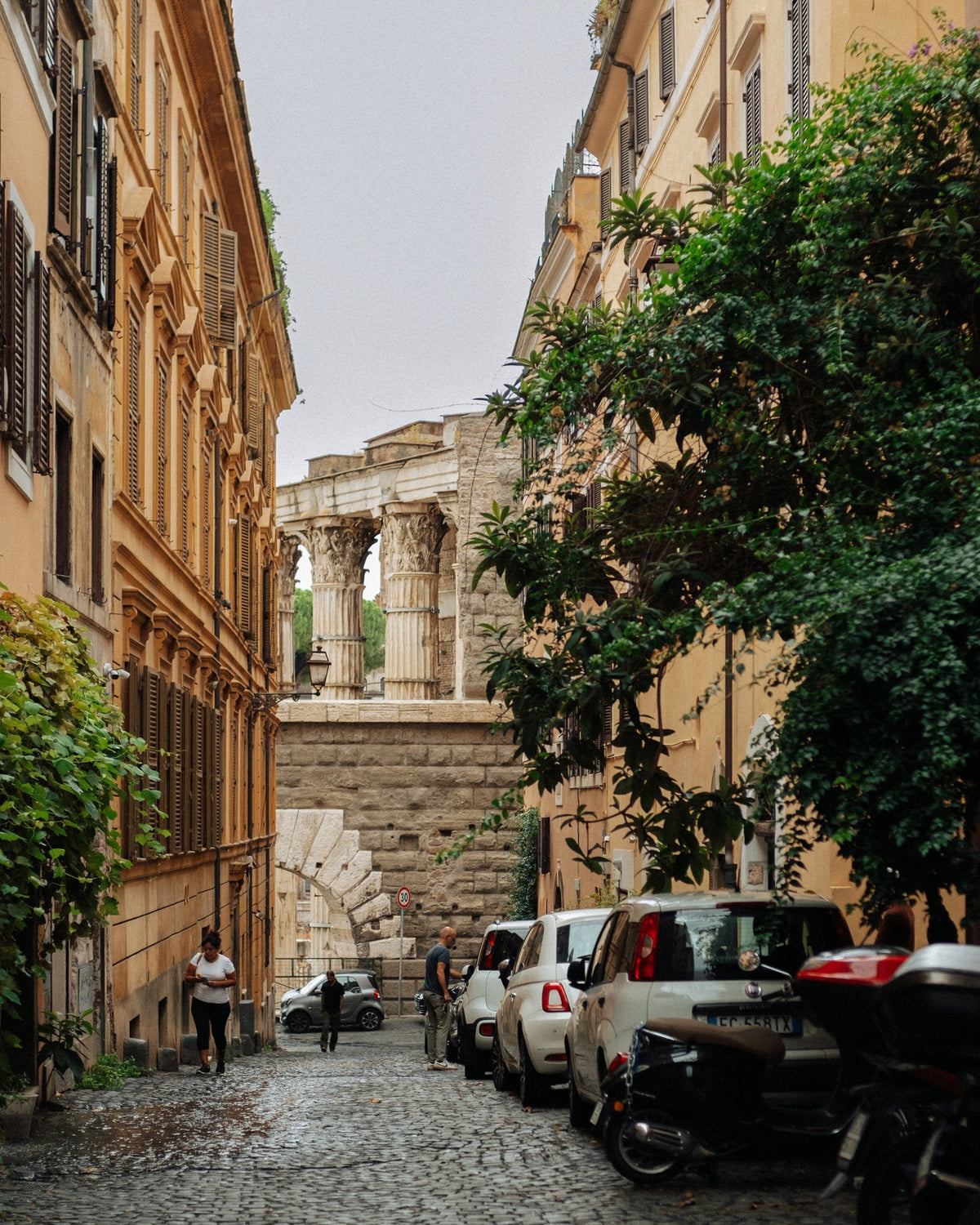
Rome is huge. Even thinking about this city makes me feel overwhelmed. It is just such a big city in every way possible, from a cultural perspective to a geographical one. You’d think that hearing about Rome since childhood might at least make you accustomed to the grandeur of the city, but the moment you step out of Termini station and make your way towards the center, you have to overcome a whole bunch of emotions — from disillusionment to excitement, to a weird affection for huge maritozzo bun, and excitement all over again.
It tires you with details, tourists, rhythms, and unwritten rules. Constantly filled with an obscene amount of tourists, it feels almost too crowded to enjoy your stay in the Eternal city. But that’s the part that I especially like about Rome — it still, somehow, manages to provide its visitors with a refuge, where time stops.
My version of Rome is hugely based on my unfinished history degree, my ability to get easily overstimulated, and a soft spot for cheesy images and places. I love its alive, chaotic, and at the same time eternal energy. I would never want to live there long-term, but I definitely feel the need to return every once in a while. Just to feel something lasting, to get tired, to buy that huge maritozzo again, and to get hot even in winter.
1. Monti (Near the Forum and Colosseum)
Probably my favourite part of the city to stay in. It’s a district right near the Forum and the Colosseum. Once a district of a young Caesar and a centre of ancient criminal activity, it’s now buzzing with lively bars and artisanal shops.
I wouldn’t exactly describe this area as truly local, since it’s too close to the main attractions to escape the influence of tourism. However, it has its own special energy, with students and young people enjoying their evenings in its bars. The proximity to ancient history becomes part of everyday life rather than an isolating factor, creating an energetic mix of the past, modernity, and daily life. I guess this is exactly what we come to Italy for.
Notes for Photographers
Monti hides plenty of interesting viewpoints overlooking the Forum and the Colosseum. It’s the neighbourhood to photograph this historical side of Rome without going for the most obvious shots.
 |
 |
2. Prati (Near the Vatican)
Probably my favourite district in Rome. It’s right near the Vatican, but for some unknown and fortunate reason, many tourists seem to skip its streets after their Vatican visit.
It’s a grid-planned part of Rome, developed in the late 19th century, with streets reportedly laid out to intentionally obstruct the view of St. Peter’s Basilica.
For me, it’s the chicest part of the city, and perhaps a little less stereotypical. Come here if you want to capture some style, browse aesthetic shops like the famous Castroni, or simply escape the buzzing streets of the city centre.
Notes for Photographers
It’s a perfect neighbourhood for those who love capturing people and street scenes. You’ll see classic Italian style without too much pretence, along with loads of cute vintage cars.
 |
 |
3. Villa Borghese (Above the Spanish Steps)
Once you’ve crossed the Spanish Steps off your list, spend some time in Villa Borghese. It’s one of the largest public parks in Rome, right in the city centre. And trust me, even if you’re not there for photography, the shade and green parrots alone make it worth a visit.
But seriously, there’s a beautiful view over Rome from the park. The city’s landmarks bathed in golden-hour light make for a pretty spectacular sight. And those pine trees along the way to the modern art museum are out of this world.
Notes for Photographers
Come closer to the evening, the light is stunning at this hour.
 |
 |
4. The Light (All Over Rome)
Speaking of light, there’s no particular location to recommend. It’s simply stunning all over Rome. I honestly think the light here is unmatched. Maybe it’s the mix of architecture, nature, and people, or perhaps even the skillful work of the city’s planners, but light has a special way of playing in Rome.
Notes for Photographers
Don’t be shy, bring your Fujifilm, it’s THE place for it.
 |
 |
5. Ponte Sant’Angelo (Centro Storico)
Right between the city centre and the Vatican, this nearly 2,000-year-old bridge probably sees thousands of visitors every day. Lined with Bernini’s statues, it offers a lovely, even slightly basic, view of St. Peter’s Basilica, with little moments of everyday life unfolding on the bridge: locals running, cycling home, or simply walking by.
Right next to it is the famous photo spot for the “holy kiss,” where St. Catherine of Siena kisses the dome of St. Peter’s Basilica. But honestly, now that this spot has become so popular, you have to stand in line to get the shot. It kind of defeats the whole point, doesn’t it?
Notes for Photographers
Don’t be afraid to look weird in front of a crowd. If you hang around by the bridge railing for a while, you’ll see all kinds of interesting people passing underneath, and you might just spot an interesting composition.
 |
 |
Honestly, Rome is too huge to fit into a short list, but these are some of the places that are dear to me. I could also talk about Trastevere with its lively streets, the Jewish Ghetto with its artichokes on every corner, or how lovely the view of the Colosseum can be from the Altare della Patria. But it’s up to every visitor to find their own spot.
My main piece of advice is not to follow a strict itinerary in Rome. It just doesn’t work like that in this city. And please don’t come in the summer!
If you chase any of these spots, tag @moment so we can see what you made of Rome. Looking for more places to point your camera in Italy? Check out our Liguria bucket list, or head north with our Lofoten Islands winter road trip.
Read more
The best third-party camera and editing apps for iPhone 18 Pro, from Moment Pro Camera II and Halide to Blackmagic Camera, with honest pros and cons.
Five Sri Lanka photo spots, from the Kandy train and Ella’s tea hills to Hiriketiya and Mirissa, with light, gear and access tips for photographers.