






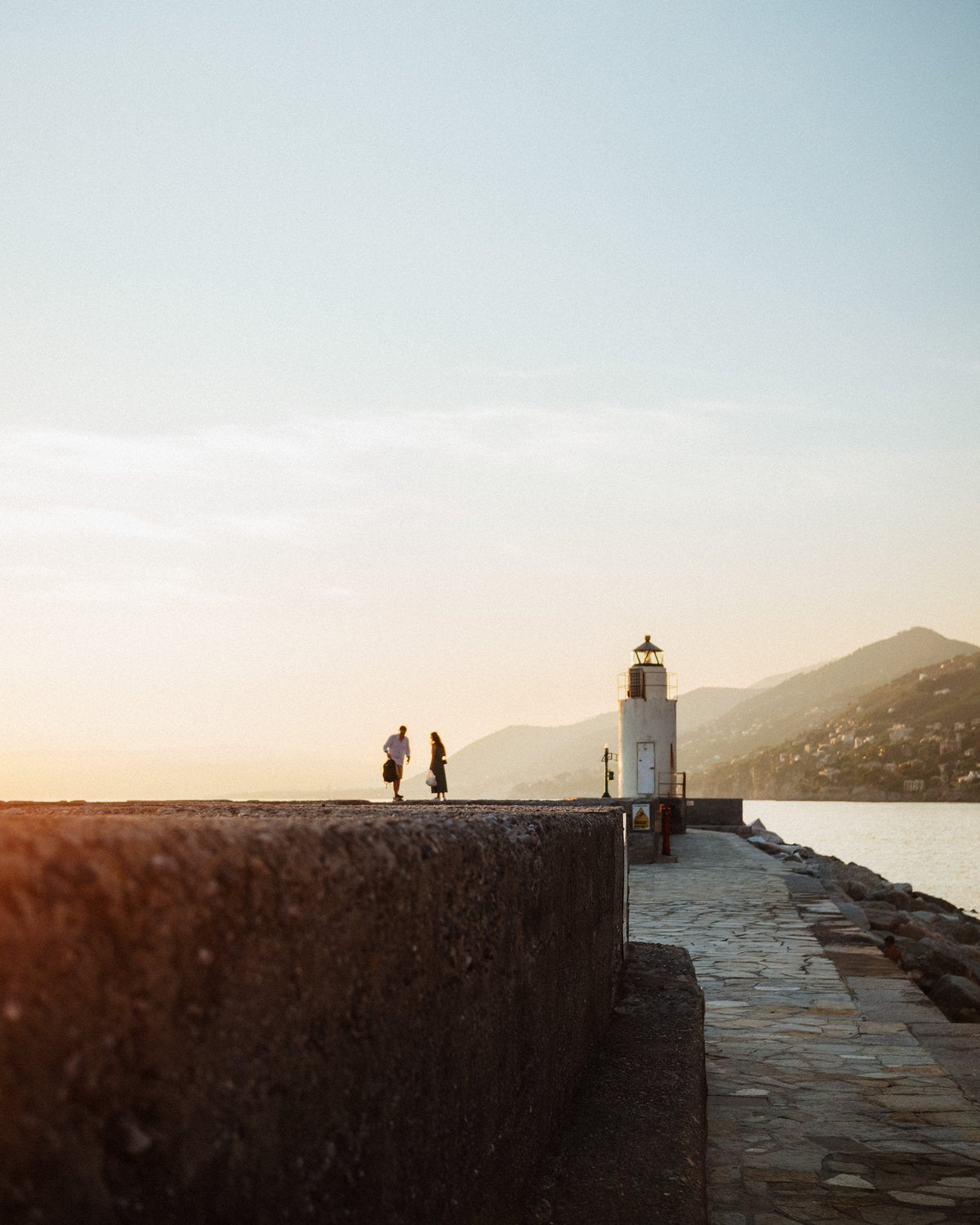
Words and photos by Ekaterina Bogdan.
I remember the first time I went to Genova. It was February 2023. Some might say, what a bad choice of season, but for me, nothing can beat the beauty of the winter sea. It was cold, windy and maybe a little bit too chaotic, but I remember the exact moment I was looking over the beach in Bogliasco and feeling so… stunned. It was the second time I felt like Italy might become my home after all. The first time was in Rome, just two months before that.
Since then, I have been returning to Liguria at least twice a year, discovering new cities and new reasons to fall in love with it. The truth is, Liguria can feel rough. It’s not particularly friendly, and its capital, Genova, has seen too much to be another cute, elegant Italian city. But that’s exactly why I was so blown away by this region.
Liguria is beautiful not because — or at least not only because — it’s pretty, but because there is a depth to this beauty. It’s a beauty built on tough nature and a difficult character. It might be a great tourist destination, but it doesn’t let tourism destroy its core. It doesn’t let it change what it is nor by thousands of foreign tourists nor by the regular flow of Milanese.
After that, I kept regularly returning to Liguria, witnessing its drastic weather changes and occasionally smudging my camera(s) with focaccia-stained fingers. I’ve been collecting a list of my favourite places, returning to them each time and finding more character and beauty that I hadn’t noticed before.
But first some tips that might help plan your Ligurian journey better:
- Travel off season, or at least not in August. If you are looking for summer views, opt for June. This year, June was suspiciously empty even in popular destinations.
- You don’t need car to travel between shoreline cities. Trains are reliable and regular enough.
- Don’t get scared by weather changes. The most stunning views come after the storm.
- Please don’t harass poor Italian nonno with a camera in his face, be mindful of people who live here
1. Camogli (Golfo Paradiso)
If your interests on Instagram have included “Fuji photography” for at least a short period of time, you’ve probably seen photos from here. And for good reason. Even after getting even more hype over the last year, Camogli is still stunning.
It’s a real town with actual local businesses, an unusual landscape with a real castle right by the sea, boats that are still used for work rather than luxury tourist tours, and gorgeous seaside alleys followed by narrow stairs.
Like many other Ligurian towns, Camogli was once an important fishing and maritime center. One traditional explanation of its name traces it back to case delle mogli (“houses of wives”), referring to the fishermen’s wives who stayed behind while their husbands were at sea. Even the town’s colourful houses had a practical purpose, helping fishermen recognize Camogli from the water.
Notes for Photographers
Camogli really shines at sunset. The midday sun can be quite harsh on its colourful houses, so plan your visit around sunrise or sunset if you want to catch the town at its most atmospheric.
 |
 |
2. Recco (Golfo Paradiso)
Just the next stop from Camogli is another charming town, Recco. Although the town itself is not that scenic and is more popular for its cheesy focaccia than its views, there is a special feeling of calmness about it, which makes it a perfect stop for a chill day.
Notes for Photographers
Don’t look for particular details here. Instead, take a stroll along the shoreline in the direction of Sori. It’s dotted with small, isolated rocky beaches.
 |
 |
3. San Fruttuoso (Portofino Promontory)
Camogli is kind of the center of the best of Eastern Liguria — otherwise, I don’t know how to explain why the next stop is the bay right next to it. San Fruttuoso is an isolated village that can only be reached by a steep hike from Camogli or Portofino, or by regular boats.
The place itself is very small and can get filled with tourists, but the views are unique: the abbey on the top, narrow medieval passages and crystal-clear water. And to think that its history dates back to the 8th century is absolutely mind-blowing.
Notes for Photographers
Everything is cramped, so it’s better to bring a wider lens. Also, if you arrive by boat, wait a bit to let other people pass. Don’t rush because of FOMO, you’ll have plenty of time to explore the place before the next boat arrives.
 |
 |
4. Bonassola (Riviera di Levante)
This tiny town is my escape place when my guests want to visit Cinque Terre. It’s the next stop from Levanto and has a population of less than a thousand. Like any other Ligurian town, it’s filled with colorful architecture and gorgeous views, but there are more layers to it than just a postcard view.
The town is connected to Levanto by an old railway line that has been transformed into a pedestrian and cycling path, making for a pretty unique and easy trail, with parts of it carved into the hills as tunnels. The path runs right along the coast, with the sea opening up between the tunnels and splashes of waves appearing along the way.
Notes for Photographers
Rather than going straight to the old railway path, take a quick hike to Punta del Carlino for best photos. The trail turns from the Shire to Mordor pretty quickly, but the views are worth it.
 |
 |
5. Sestri Levante (Riviera di Levante)
It’s a pretty big town by Ligurian standards, with a solid historical center where you can hunt for unique angles and day-to-day moments that capture a real sense of local life.
The most intriguing part about this town is its peninsula, which creates a natural division between two bays, hence its nickname, “the city of two seas.”
Notes for Photographers
There’s a good viewpoint just 15 minutes away from the main beach. From there, you can see the whole bay — perfect for a postcard view.
 |
 |
6. Rapallo to Portofino Walk (Tigullio Gulf)
Listen, I know Portofino is a big one, but I honestly didn’t really enjoy the town itself. It has turned into a kind of Disneyland, with big luxury brands fighting for space and the title of the most overpriced espresso in Italy. However, the road to it is worth it if you’re in need of good coastal views.
A 8 km (5 miles) trail connects Rapallo, Santa Margherita and Portofino, with numerous small beaches where you can rest, as well as boats and fishermen appearing on the horizon. A low-cortisol photo walk.
Notes for Photographers
Don’t bring too much gear. Like, honestly, the road is chill, but with the sun, it can get overstimulating pretty quickly. One medium is enough.
 |
 |
If you chase any of these spots, tag @moment so we can see what you made of Liguria. Looking for more places to point your camera? Check out our Lofoten Islands winter road trip and 9 Photo Spots for Sunsets in the Pacific Northwest.
Read more
Montenegro photo spots bucket list: Perast, Durmitor’s Black Lake, Virpazar, Sveti Stefan and Budva, with light, access and shooting notes for photographers.

Davey tests iPhone 18 Pro aperture control, shutter speed, white balance and the histogram with Moment Mobile II lenses, the VND QuickLock filter and new cases.