




Words and photos by Nikita Poly.
Montenegro feels like a hidden gem to me. For such a small country, the variety of landscapes is almost unbelievable: sunny beaches backed by mountains, forests, rivers, national parks, and snowy peaks. You can move between very different scenes in less than a day by car.
I visited Montenegro in September, a less crowded and still relatively warm season. The sea is warm, but the air is starting to cool. The greenery turns beautiful shades of orange and red, and higher in the mountains it gets chilly, though nothing a light coat can’t handle.
In this article, I’ll cover five places across the country that inspired me as a photographer. Keep in mind that renting a car is a must, since some of these places aren’t reachable by public transportation.
A quick note before you go: be kind to the places and people you're photographing. Stay on marked trails, don't block viewpoints or narrow roads with your car, take your trash with you, and ask before photographing anyone up close.
1. Perast and the Bay of Kotor (Kotor Bay Region)
Kotor is the main city, where everybody stops to shop and walk around. It’s busy and touristy, and while it’s worth a few hours of exploring, Perast is where I’d head first.
The drive from Kotor is short and scenic. Along the road, you can enjoy beautiful views of the bay, dotted with oyster farms and little beach houses. I strongly recommend stopping along the way to take it all in, possibly with an oyster in hand.
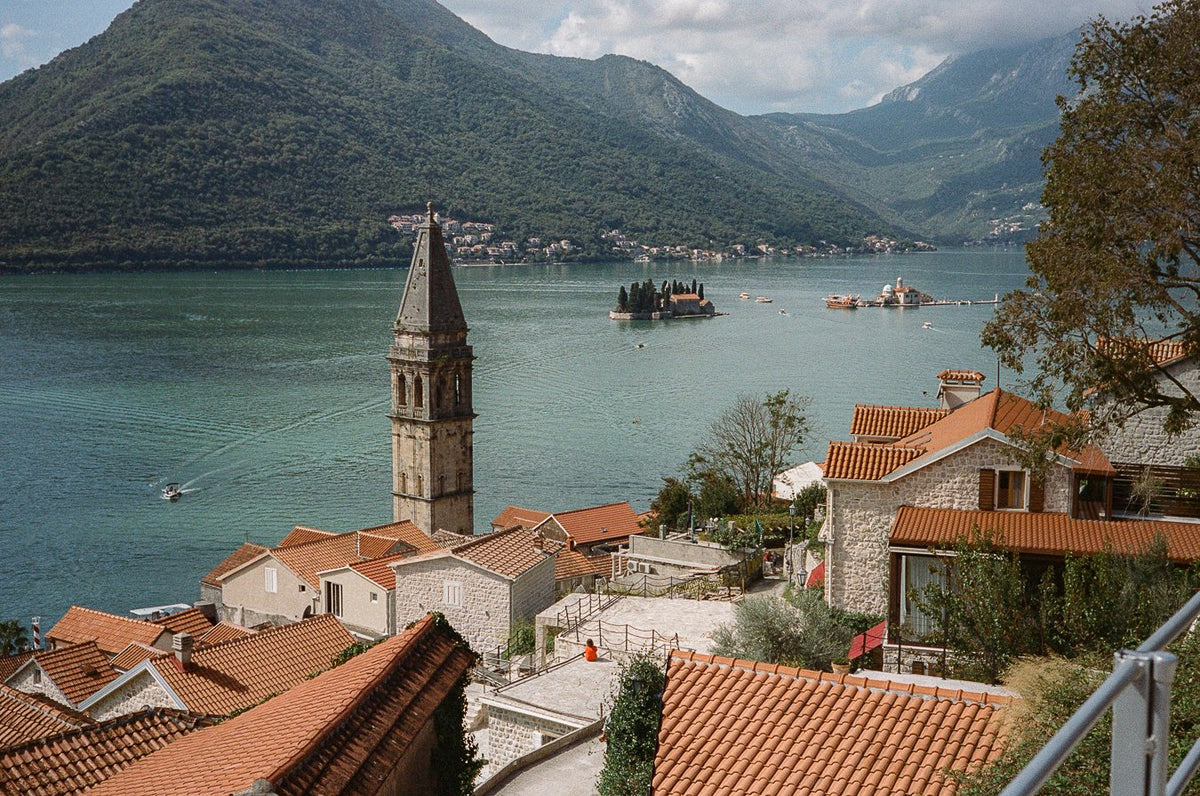
Once in Perast, I recommend parking near the main road and working your way downhill to the promenade. The view of St. Nicholas’ Church and its bell tower is truly breathtaking.
Don’t miss the two islands just offshore: Our Lady of the Rocks and St. George. Try framing both from the promenade, then take a boat out for another angle on Perast from the water. Boats can take visitors to Our Lady of the Rocks, but St. George, a monastery island, is generally not open to visitors. I found it best to photograph St. George from the boat or from Our Lady of the Rocks.
Notes for Photographers
- Light: Midday and golden hour both work here. The surrounding mountains are high, so don’t assume the sun reaches the town right at sunrise. Watch for when it clears the ridgeline.
- Access and parking: Walk the promenade and the streets climbing toward the main road for both low and elevated views. There’s free parking along the main road if you can find a permitted space, as well as paid options.
- What to shoot: Start wide, with the town, islands, and mountains in one frame. Then move in on the bell tower, stone facades, boats, and waterfront details. From the water, turn back toward Perast.
- Island visit: Boat schedules and fees change, so check at the ferry terminal for current information.
 |
 |
 |
 |
2. Crno Jezero (Black Lake), Durmitor National Park (Northern Montenegro)
The northern region of Montenegro is magical. Even the drive from the Bay of Kotor to the north is full of beautiful viewpoints, which can make the two-hour drive to Žabljak take much longer. The road passes green forests and crystal-blue lakes and rivers, and as the weather cools, the mountains slowly turn from green to white, even in summer.
Along the way, you can stop at several viewpoints. The Slano Jezero viewpoint offers a great view of a truly unique-looking lake and is well worth the stop. If you have time, you can also stop at the Durmitor viewpoint high in the mountains, but my recommendation is to save your long stop for Durmitor National Park itself.
The highlight of the park is Crno Jezero (Black Lake), which is basically a Windows wallpaper: turquoise water, green forests, and snowy mountain peaks in the background. Not many views can beat that. You can hire a small boat to cruise the lake, or just hike around it and sit by the shore. The place is quiet and not very touristy in the morning. I spent half a day here walking around the lake, soaking in the fresh mountain air, and taking a nap near the shore, which is a mandatory activity if you ask me.
Notes for Photographers
- Light: Morning wins here. The water is calm, the peaks reflect in the lake, and the crowds haven’t arrived yet. Later in the day, the light on the water gets harsher and the shore gets busy.
- What to shoot: Start wide from the shore, with the turquoise water, forest, and snowy peaks in one frame, then walk the trail around the lake for side angles. Hiring a small boat gets you a low, close-to-the-water perspective.
- Access and parking: Paid parking is about a 10-minute walk from the lake. Arrive before noon, especially in peak season.
 |
 |
 |
 |
3. Virpazar (Crmnica Region)
After visiting the northern region, I’d suggest heading southeast toward the Crmnica region, Montenegro’s wine country. The region is known for its vast wetlands, dramatic coastal mountains, and the beautiful Lake Skadar. At its heart is Virpazar, a quiet, authentic fishing village set along a small canal. This is the place you want to visit as a photographer. Yes, the nearby landscapes and views are extremely tempting, but this village is a chance to slow down and get a glimpse into the lives of the locals.
The village seems frozen in time. Walking around, you’ll find centuries-old, family-run houses whose owners will invite you in to taste their homemade wine and food. You’ll occasionally stumble upon old roads and fortresses scattered around the village. At first, it seems there isn’t much to do in the village itself, but I found it to be the highlight of my trip. I took my best pictures there, because it reminded me of my childhood. It’s not often you get to experience that kind of simplicity, especially if you come from a big city.
Here you won’t find great Wi-Fi, high-end restaurants, or shopping malls, just a quiet, unhurried experience and a window into older, simpler times.
Notes for Photographers
- Light: Early morning and late afternoon give you soft light on the village and the canal, and the streets are at their quietest.
- What to shoot: The canal with its boats and old stone bridge, the family-run houses and wine cellars, and locals going about their day. The fortress above the village gives you an elevated view over Lake Skadar.
- People: You’ll likely be invited in for homemade wine and food, and that’s the story here. Ask before photographing people inside their homes, and take the time to talk first.
 |
 |
 |
 |
4. Rijeka Crnojevića and Sveti Stefan (Southern Coast)
After spending some time in Virpazar, you can start heading down to Montenegro’s southern coast, but I’d recommend taking the long way, past some of the beautiful rivers that feed into Lake Skadar.
Driving through the small village of Rijeka Crnojevića, you’ll probably find yourself stopping along the road to take in the river that winds through it on its way to the lake. There isn’t much else to the village, but it’s a lovely, scenic stop. You can take a boat tour from here, even all the way out to Lake Skadar. If you have time, you can also spend a night, which is convenient if you’re planning to do the famous Lake Skadar boat tour anyway.
Sveti Stefan is Montenegro’s most iconic coastal landmark: a fortified 15th-century island turned exclusive luxury resort, connected to the mainland by a narrow stone causeway. Located along the Budva Riviera, it’s a photographer’s delight, with several viewpoints overlooking the island. My recommendation is to start with photos from higher ground, then take the road down to the coastline, which is full of panoramic views and pretty gardens. There’s also a pleasant path along the coast toward Miločer Beach with a few good spots to shoot, like a long, striking rock just above the water.
There’s free parking nearby, so getting there by car is easy.
Notes for Photographers
- Light: Late afternoon and golden hour are the move at Sveti Stefan. The low sun warms the island’s rooftops, and the causeway makes a natural leading line. Mornings are quieter if you want the viewpoints to yourself.
- What to shoot: Start with the classic elevated views of the island and causeway, then work the coastline toward Miločer Beach for foregrounds: gardens, rocks, and the long rock above the water. In Rijeka Crnojevića, the old bridge and the river bend are the frames, plus boats if you head out on the water.
- Access: The island itself is a private resort, so plan to photograph it from the viewpoints and public beaches, and don’t count on getting inside. There’s free parking near the viewpoints.
 |
 |
 |
 |
5. Budva Old Town and Fort Mogren (Budva Riviera)
For our final destination, we continue on to Budva, the country’s tourism capital. Often called the “Montenegrin Miami,” this coastal city is full of interesting things to shoot. The Old Town (Stari Grad) is packed with historic spots and narrow alleys, and the beautiful beaches are a welcome break after the long journey.
I’d suggest starting on the main beach and walking toward the Old Town, then continuing to the less touristy beaches farther along, where you’ll find amazingly shaped rocks and crystal-clear water. The Old Town’s narrow alleyways are a great playground for light, so use what’s available to isolate interesting subjects.
Fort Mogren is a great vantage point overlooking Budva’s Old Town and the nearby coastline. You can get there by car, and I’d suggest heading up toward sunset.
Notes for Photographers
- Light: The alleys work all day. Watch for shafts of light cutting between the buildings and use them to isolate a subject. For the Fort Mogren view, be in place before sunset and stay to watch the city lights come on.
- What to shoot: Start wide on the main beach, then move to details and street scenes in the Old Town. On the quieter beaches, the rock formations against the clear water are the frame. From the fort, you can get the Old Town rooftops and the coastline in one shot.
- Access: The route from the beach to the Old Town is an easy walk. Fort Mogren is a short drive up, so go before sunset to claim a spot.
 |
 |
 |
 |
If you chase any of these spots, tag @moment so we can see what you made of Montenegro. Looking for more places to point your camera? Check out our Lofoten Islands winter road trip and 9 Photo Spots for Sunsets in the Pacific Northwest.
Read more

One small iphone lens, two trips that couldn't have been more different. I have built my career in the cold . Arctic expeditions, marine research surveys, open ocean in the far north, ice and soft ...
Liguria photo spots bucket list from a local: Camogli, Recco, San Fruttuoso, Bonassola, Sestri Levante and the Rapallo–Portofino walk, with photography tips.